

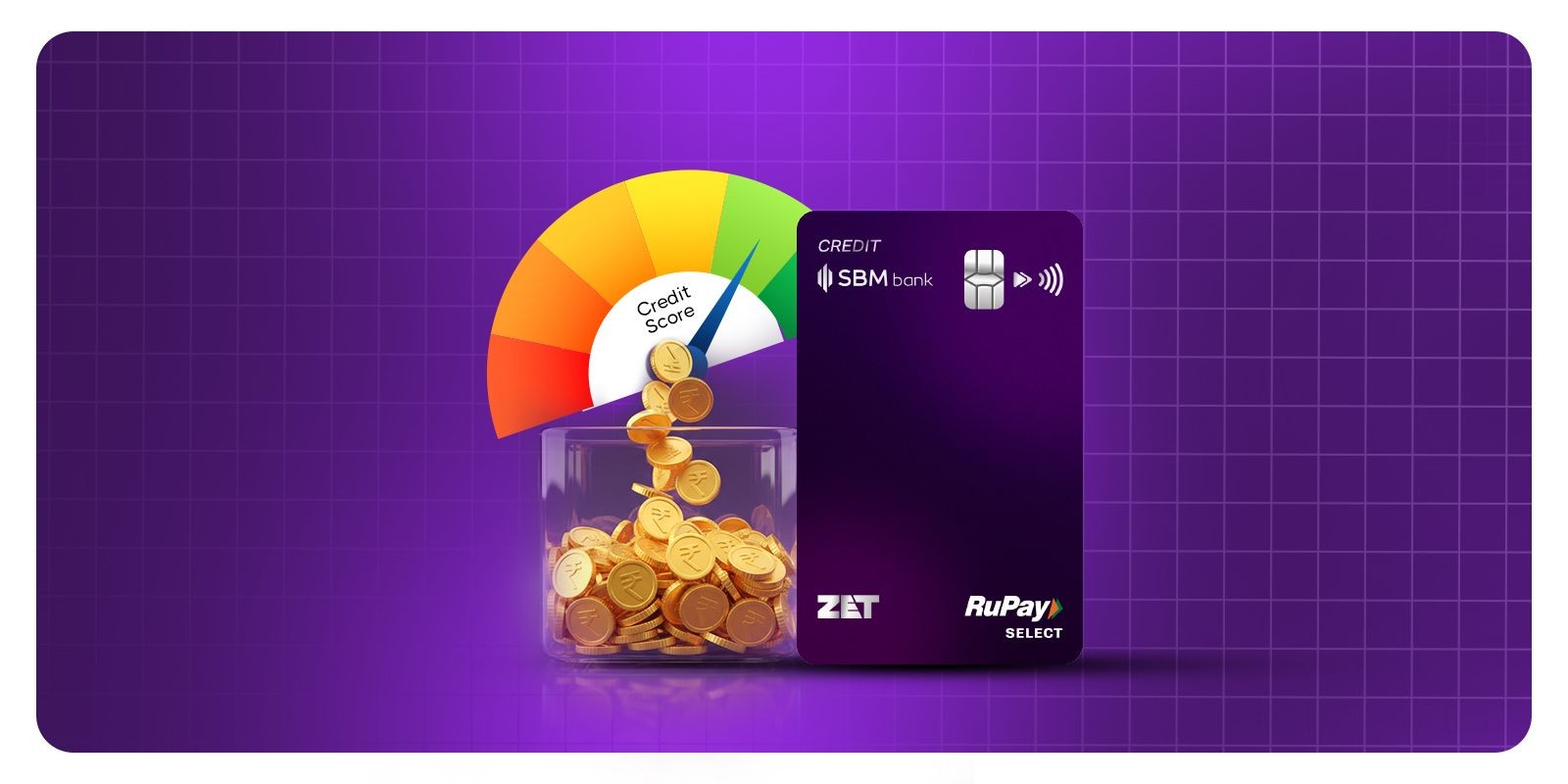
If your credit score is low or you have never had one at all, two names you will likely come across in India in 2026 are ZET and StashFin. Both are digital financial platforms. Both report to credit bureaus. Both can, in the right circumstances, contribute to a better credit profile.
But they work in completely different ways, and picking the wrong one for where you are in your credit journey can slow down your recovery rather than accelerate it.
This comparison covers what each platform actually offers, who it accepts, how each one builds credit, and which one makes more sense depending on your current score and situation.
What ZET and StashFin Are
ZET is a credit building and monitoring platform. Its core product is the SBM ZET FD credit card: a secured credit card backed by a fixed deposit placed with SBM Bank India. ZET is specifically designed for people who cannot access regular credit products because they have no credit history or a CIBIL score below 700. It reports your monthly payment activity to credit bureaus from the very first billing cycle.
StashFin is a digital lending platform. It offers an unsecured credit line of up to Rs. 5 lakh that functions like a revolving loan. StashFin is designed for people who already have some credit history and employment income, and who need short-term liquidity. Credit building is a side effect of using StashFin, not its primary purpose.
This distinction matters most when you look at who can actually access each platform.
Entry Requirements: Who Each Platform Accepts
| Requirement | ZET | StashFin |
| Minimum CIBIL score | Not required | 650+ |
| Income proof | Not required | Min Rs. 18,000 per month |
| Collateral | FD (min Rs. 2,000) | None |
| Employment type | Any (including students and freelancers) | Salaried or self-employed |
| Bureau reporting | Yes | Yes |
| Product type | Secured FD credit card | Unsecured revolving credit line |
If your CIBIL score is below 650 or you have no credit history at all, StashFin is almost certain to reject your application. ZET has no minimum CIBIL requirement. It does not check your bureau score for approval at all.
How Each Platform Builds Credit
Understanding how each platform reports to bureaus, and what risks come with each, is the most important part of this comparison.
How ZET Builds Credit
You place a fixed deposit of at least Rs. 2,000 with SBM Bank. ZET issues a credit card with a credit limit equal to your FD amount. You use the card for regular purchases: groceries, fuel, online shopping, bill payments. You pay the full outstanding amount each month before the due date. ZET reports your on-time payment to CIBIL, Experian, and other bureaus every month.
Because your credit limit equals your FD, you cannot spend more than you deposited. The risk ceiling is fixed and known in advance. The FD also earns up to 7% interest per annum while it sits as collateral, meaning your money is not idle.
There is no interest charged on the credit card as long as you pay the full bill each month, which is how credit cards are designed to work.
How StashFin Builds Credit
StashFin is a lender first. When you draw from the credit line and repay it on time, those repayments are reported to credit bureaus. This does generate a payment history, which contributes to your credit profile.
However, the credit line carries an interest rate between 11.99% and 59.99% per annum. The specific rate assigned to you depends on your income, CIBIL score, and employment profile. For someone with a lower score or a thinner credit file, the rate assigned will typically be at the higher end of this range.
If you borrow Rs. 30,000 at 40% per annum and take 12 months to repay, the total interest paid exceeds Rs. 14,000. A single missed payment at these rates adds penalty charges and worsens the credit entry you were trying to improve.
The Risk Difference
This is the most important distinction for anyone using either platform specifically to recover a bad credit score.
ZET’s maximum risk is the FD amount. If you deposit Rs. 5,000 and use the card, the worst case scenario is that you spend Rs. 5,000 and fail to repay it. The bank recovers the FD. Your score takes a hit but you are not in a debt spiral. The loss is capped.
StashFin’s risk scales with the credit line and interest rate. The product allows you to borrow up to Rs. 5 lakh at rates reaching 59.99%. A missed payment on an unsecured credit line at high interest compounds quickly. For someone who is already dealing with a damaged credit score, a misstep here can worsen their position significantly.
StashFin is built on the assumption that you have stable salaried income, the discipline to manage a revolving credit line, and the financial buffer to handle a missed month. That assumption may not hold for the person who is actively recovering from bad credit.
Expert insight: Using a high-interest unsecured credit line to rebuild credit is a strategy that can work, but it amplifies both the upside and the downside. A secured card with a low credit limit and zero interest (when paid in full) is slower but removes almost all the downside risk. For genuine credit recovery, the controlled approach wins.
Feature Comparison
| Feature | ZET | StashFin |
| Credit building mechanism | FD-backed secured credit card | Unsecured revolving credit line |
| Credit monitoring | Yes (Experian score) | No native monitoring tool |
| Smart improvement plan | Yes (ZET Plus) | No |
| Payment reminders | Yes | No |
| Fraud and dark web alerts | Yes | No |
| Credit Guru support | Yes (report error help) | No |
| Interest earned on collateral | Yes (up to 7% on FD) | N/A |
| Interest on borrowing | Zero (if paid in full each month) | 11.99% to 59.99% per annum |
| Max credit exposure | Equal to FD amount | Up to Rs. 5 lakh |
| Monthly cost | Free / ZET Plus at Rs. 3 per day | Interest on borrowed amount |
When StashFin Makes More Sense
StashFin is not a bad product. It is the wrong product for a specific use case: credit recovery from a low or zero score.
StashFin is better suited when:
Your CIBIL score is already 700 or above and you need a short-term credit line for a specific expense such as a medical emergency, home repair, or travel. The 0% interest period for up to 30 days makes it a useful bridge for short-term gaps at zero cost.
You want to add an unsecured credit product to your existing credit mix. Lenders value a history that includes both secured and unsecured products. If your profile currently only has FD-backed cards or secured loans, a responsibly managed unsecured credit line can diversify your credit history positively.
You have stable salaried income significantly above Rs. 18,000 per month and have a clear plan for repaying within the 30-day zero-interest window or within a short EMI tenure.
When ZET Makes More Sense
ZET is the right starting point when:
Your CIBIL score is below 650 or you have no credit history. StashFin will not approve you. ZET will.
You want to build credit without taking on interest rate risk. The FD structure means you cannot borrow more than you deposited, and the card carries no interest if you pay the full bill on time each month.
You want credit monitoring, payment reminders, fraud alerts, and a personalised improvement plan alongside the credit-building product, all in one place.
You are a student, freelancer, gig worker, new graduate, or someone who has just moved to India and cannot show consistent formal employment income.
The Verdict
For recovering a bad credit score in India in 2026, ZET is the more appropriate starting point for most people.
It requires no income proof, no minimum CIBIL score, and no prior credit history. The FD structure limits your downside. It includes active monitoring and improvement tools that StashFin does not offer. And it costs nothing beyond the FD itself if you manage the card correctly.
StashFin becomes relevant once your CIBIL score has reached 700 or above. At that point, adding an unsecured credit product to your portfolio can help diversify your credit mix. By then, you should also be eligible for personal loans and cashback credit cards with significantly lower interest rates than StashFin’s upper range.
The path most likely to work: start with ZET, build to 750 over 12 to 18 months, then evaluate StashFin or other unsecured products as additions to a mature credit profile, not as replacements for a credit-building foundation.
FAQs
Can StashFin reject me even if I have a 700 CIBIL score? Yes, it is possible. StashFin uses 650 as a general guideline, but actual approval also depends on your income, employment type, employer category, and internal scoring. A 700 CIBIL score improves your chances but does not guarantee approval, especially for higher credit line amounts.
Does using the ZET FD credit card actually improve your CIBIL score? Yes. ZET reports monthly payment activity to CIBIL and other credit bureaus from your first billing cycle. Consistent on-time payments combined with low credit utilisation (keeping your balance well below the credit limit) typically move a score from zero to 650 within 6 months and to 700 within 12 months.
What happens if I miss a StashFin repayment? Missed payments on StashFin’s unsecured credit line are reported to credit bureaus as late payments. At interest rates of 11.99% to 59.99%, the outstanding balance also grows quickly when payments are missed. Both the negative bureau entry and the compounding balance can make your credit situation worse than before you started.
Does ZET require income proof to issue the credit card? No. The ZET FD credit card requires no income proof, no salary slip, and no ITR filing. You need a valid PAN, Aadhaar for KYC, and the minimum FD amount of Rs. 2,000.
Can I use both ZET and StashFin at the same time? You can, but it is advisable only once your CIBIL score is above 700 and you have confirmed eligibility for StashFin’s product. Using both simultaneously while still in the credit-building phase adds repayment complexity. The most common mistake is taking on an unsecured credit line before the credit-building foundation is stable.